---
title: What Does the FDA Require to Approve a Monoclonal Antibody Biosimilar in 2026?
description: What does the FDA require to approve a monoclonal antibody biosimilar in 2026? Analytical, PK, clinical, and immunogenicity evidence explained.
image: https://www.crystalbiosolutions.com/hubfs/Biosimilar-drug-antibody-crystal-bio-solutions.png
---

- Bioanalysis & Biomarkers
- [All Bioanalysis & Biomarker Services](https://www.crystalbiosolutions.com/services/bioanalysis-and-biomarkers)
- [PK Assays for Biologics & ADCs](https://www.crystalbiosolutions.com/services/pk-bioanalysis)
- [NAb & ADA Immunogenicity Assays](https://www.crystalbiosolutions.com/ada-and-nab-testing-in-biologics-pk-efficacy-and-regulatory-risk)
- [Receptor Occupancy Assays](https://www.crystalbiosolutions.com/services/receptor-occupancy-assays)
- Biologics CMC Analytical
- [All Biologics CMC Analytical Services](https://www.crystalbiosolutions.com/characterization-cmc-analytical)
- [Developability Assessment](https://www.crystalbiosolutions.com/services/biologics-developability-assessment)
- [Extended Characterization by HRMS](https://www.crystalbiosolutions.com/services/biologics-extended-characterization-hrms)
- [Biotransformation & In Vivo CQA](https://www.crystalbiosolutions.com/services/biotransformation-in-vivo-cqa)
- [Clinical Pharmacology](https://www.crystalbiosolutions.com/services/clinical-pharmacology)
- Solutions
- [ADC Programs](https://www.crystalbiosolutions.com/antibody-drug-conjugates-adc)
- [Regulatory Affairs Support](https://www.crystalbiosolutions.com/services/regulatory-affairs-biologics-adc-cgt)
- [Clinical Support](https://www.crystalbiosolutions.com/clinical-research-services)
- [Resources](https://www.crystalbiosolutions.com/news-and-events)
- [About Us](https://www.crystalbiosolutions.com/about-us)
- [Request a Proposal](https://www.crystalbiosolutions.com/contact-us)
Feb 16, 2026
# What Does the FDA Require to Approve a Monoclonal Antibody Biosimilar in 2026?
What does the FDA require to approve a monoclonal antibody biosimilar in 2026? Analytical, PK, clinical, and immunogenicity evidence explained.
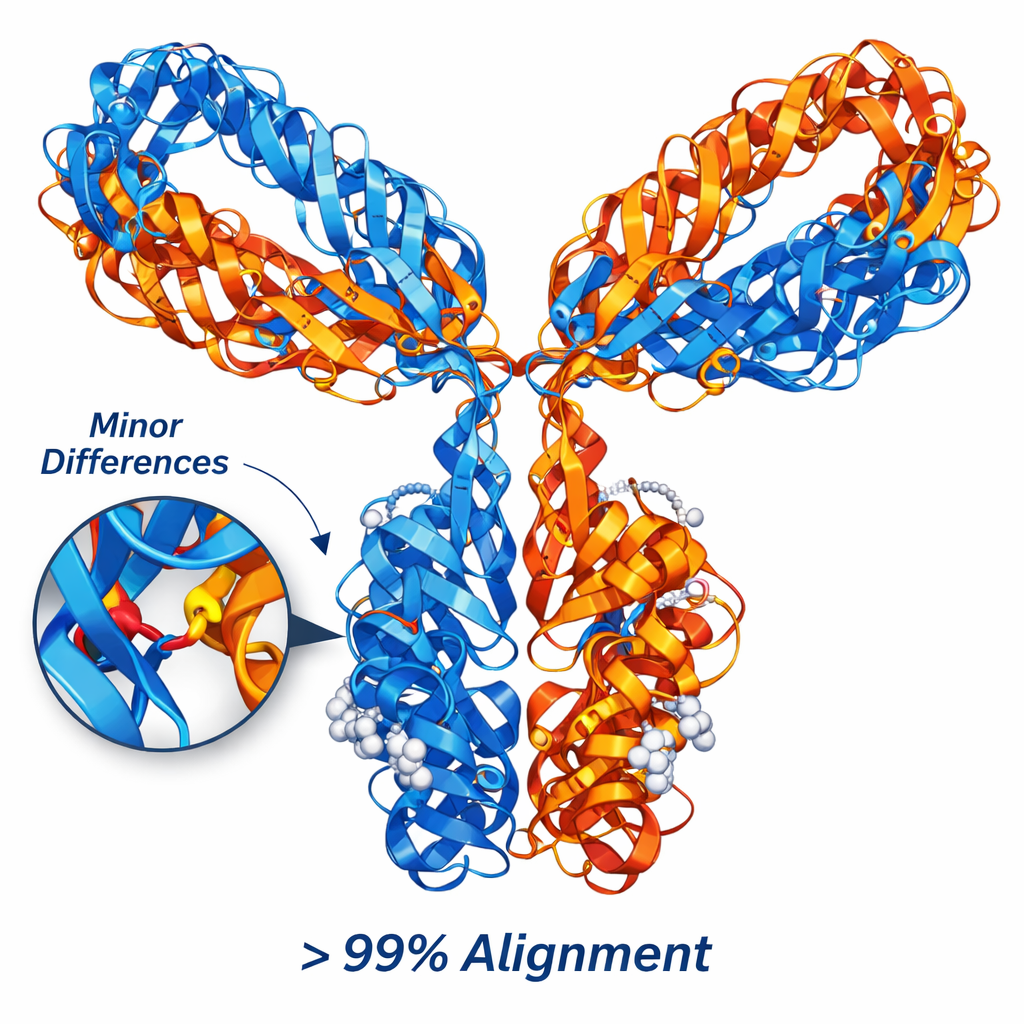\\
In 2025, the [U.S. Food and Drug Administration (FDA)](https://www.fda.gov) approved several monoclonal antibody biosimilars under section [351(k) of the Public Health Service Act](https://www.fda.gov/media/110086/download) only when sponsors demonstrate, through a totality of evidence, that there are no clinically meaningful differences from the reference product in [structure, function, pharmacokinetics, immunogenicity, and clinical performance](https://www.fda.gov/media/82647/download).
But what is the FDA actually asking for when approving monoclonal antibody biosimilars in 2026?
This article summarizes publicly available FDA approval packages for recently licensed monoclonal antibody biosimilars, including denosumab and ustekinumab biosimilars. This article is written for teams interested in biosimilar programs, or biotech teams struggling with CMC and analytical development.We focused on FDA expectations in the United States, not covering EU regulatory pathways.
## 1. Extensive Analytical Similarity Is the Core Requirement
[The FDA consistently emphasizes that analytical similarity forms the scientific foundation of biosimilarity.](https://www.crystalbiosolutions.com/biosimilar-drugs-development-2025-2026) Clinical trials do not compensate for weak analytics. In recent approvals, FDA reviewers evaluated:
Primary Structure and Molecular Integrity
- Peptide mapping by LC-MS (Liquid Chromatography–Mass Spectrometry)Confirms amino acid sequence identity and detects structural variants.
- Intact mass analysisConfirms overall molecular mass consistency.
- PTM analysis (Post-Translational Modifications)Detects oxidation, deamidation, glycation, and other chemical modifications that may alter stability or function.
Even subtle structural differences may alter binding affinity, stability, or immunogenicity. The FDA requires these tests to demonstrate that the biosimilar’s primary structure and molecular variants are highly similar to the reference product and do not introduce clinically meaningful differences.
Glycosylation and Charge Heterogeneity
- Glycan profiling (e.g., HILIC chromatography)Evaluates glycoform distribution, which may affect Fc receptor binding and half-life.
- Charge variant analysis (cIEF: capillary isoelectric focusing)Assesses acidic and basic species.
Glycosylation patterns and charge variants can influence Fc-mediated functions, serum half-life, and effector activity. These analyses demonstrate that critical quality attributes such as glycosylation and charge heterogeneity fall within an acceptable similarity range relative to the reference product.
Aggregation, Purity, and Stability
- SEC-HPLC (Size Exclusion Chromatography)Detects aggregates and high molecular weight species.
- CE-SDS (Capillary Electrophoresis–SDS, reduced and non-reduced)Assesses heavy/light chain integrity and fragmentation.
- Forced degradation studiesStress conditions (thermal, oxidative, light) confirm comparable degradation pathways.
Protein aggregates may increase immunogenicity risk, and fragments may alter potency or pharmacokinetics. Divergent degradation pathways may indicate formulation or process differences. These tests are used to demonstrate comparable purity profiles, aggregate levels, and degradation behavior between the biosimilar and reference product.
Mechanism-Aligned Functional Assays
For [ustekinumab biosimilars](https://www.accessdata.fda.gov/drugsatfda_docs/nda/2025/761379Orig1s000MultidisciplineR.pdf?utm_source=chatgpt.com), FDA evaluated:
- IL-12 and IL-23 binding assays
- Neutralization assays
- STAT3/STAT4 signaling inhibition
- Fc-related function confirmation
For [denosumab biosimilars](https://www.accessdata.fda.gov/drugsatfda_docs/nda/2025/761444Orig2s000MultidisciplineR.pdf?utm_source=chatgpt.com):
- RANKL binding assays
- Cell-based neutralization assays
Structural similarity alone does not ensure identical biological activity. But mechanism-aligned functional assays prove that the biosimilar engages its target and downstream signaling pathways with comparable potency and biological effect.
## 2. Pharmacokinetic (PK) Similarity Must Be Demonstrated in Humans
After analytical similarity is established, FDA requires comparative PK studies in human subjects.Parameters include:
- Cmax (maximum serum concentration)
- AUC (area under the concentration–time curve)
In a recent ustekinumab biosimilar case, an initial PK study failed because differences in protein content affected exposure; a corrected formulation and repeat study were required to establish similarity \[4\].
Exposure differences may translate into altered safety or efficacy. The FDA requires PK studies in humans to demonstrate equivalent systemic exposure, [typically defined as 90% confidence intervals within the 80–125% range for key PK parameters.](https://www.fda.gov/media/88622/download)
## 3. A Focused Comparative Clinical Study
The FDA does not require sponsors to repeat the entire original development program of the reference monoclonal antibody. However, it requires at least one comparative clinical study in a population and endpoint capable of detecting potential differences.These studies are conducted in humans.The purpose is not to re-establish efficacy from scratch. The purpose is to confirm that no clinically meaningful differences exist once analytical and PK similarity have already been demonstrated \[1,2\].
What a Biosimilar Clinical Study Is and Is Not
| What It Is | What It Is Not |
| --- | --- |
| A confirmatory equivalence study | A full Phase 3 efficacy program |
| Conducted in humans | Conducted only in animals |
| Designed to detect small differences | Designed to prove superiority |
| Built on strong analytical similarity | A replacement for analytical characterization |
| Statistically bounded (80–125% PK; defined equivalence margins) | Open-ended hypothesis testing |
| Often includes switching assessment | Designed to expand indications |
## 4. Immunogenicity Must Be Scientifically Interpretable
The FDA carefully evaluates:
- ADA (Anti-Drug Antibodies)
- Neutralizing antibodies (NAbs)
- Correlation between ADA status, drug levels, efficacy, and safety
\*Sampling schedules are aligned with drug half-life and exposure windows.
Monoclonal antibodies are proteins. Immune responses may reduce drug exposure, decrease efficacy, or increase adverse events. [ADA and Nab assays](https://www.crystalbiosolutions.com/ada-and-nab-testing-in-biologics-pk-efficacy-and-regulatory-risk) proves the clinical impact of immune responses are comparable to the reference product and do not alter safety or effectiveness.
## So What the FDA Requires in 2026?
Based on recent FDA reviews, monoclonal antibody biosimilar approval requires:
1\. Extensive structural and physicochemical characterization
2\. Mechanism-aligned functional potency assays
3\. Human PK equivalence within 80–125%
4\. One focused comparative clinical study in a sensitive population
5\. Interpretable immunogenicity assessment
## How CBS Can Help in Biosimilar Programs
CBS supports the analytical and bioanalytical foundation of monoclonal antibody biosimilar programs, including:
- High-resolution LC-MS for structural confirmation and PTM analysis
- Glycan profiling and charge variant characterization
- SEC and CE-SDS for aggregation and purity
- Stability and forced degradation studies
- Host cell protein and residual DNA testing
- Development and qualification of mechanism-aligned potency assays
- Bioanalytical method development and phase-appropriate validation
Reach out to get a free consultation:
[](https://www.crystalbiosolutions.com/hs/cta/wi/redirect?encryptedPayload=AVxigLIUtS3hvkFOhEqM0rrONhxshPWkfxei3SaBz0Tw6YWV14DFR69ToOdibZcfclCOafKncPLrFIbuYIGGDDwZOSjHShmUYJKu8IqhmRpXEZBX%2FE5RNbJjIgE85qr6%2BWRMkM7TsmrT8EusmoumN3%2FUDO1xyHOVbj%2Bo7dmcTwbvUq1DcUgoHAGD1rKVop7gI0%2Bm36vswtq%2BvQtyJZn6u07pv0lYJ10N&webInteractiveContentId=270508115133&portalId=146565877)
#### Frequently Asked Questions
1. **Does the FDA require full Phase 3 replication for biosimilars?**
No. The FDA requires a focused comparative clinical study in a sensitive population, not full replication of the originator’s program.
2. **Are animal studies required?**
Animal data may be included, but the primary pillars are analytical similarity, human PK, and clinical confirmation.
3. **What statistical range defines PK similarity?**
90% confidence intervals must fall within 80–125% for key PK parameters.
4. **Why is glycosylation so important?**
Glycosylation can affect Fc receptor interactions, half-life, and effector function.
5. **Can analytical similarity reduce clinical burden?**
Yes. FDA guidance explicitly states that stronger analytical similarity may reduce the scope of clinical studies.
6. **What happens if PK equivalence fails?**
Sponsors must identify the cause, often formulation or attribute differences, and repeat studies if necessary.
*Reviewed by CBS Scientific Marketing Team. February, 2026.*

- [Our Services](https://www.crystalbiosolutions.com)
- [Bioanalysis and Biomarker](https://www.crystalbiosolutions.com/services/bioanalysis-and-biomarkers)
- [CMC Analytical](https://www.crystalbiosolutions.com/characterization-cmc-analytical)
- [Clinical Pharmacology](https://www.crystalbiosolutions.com/services/clinical-pharmacology)
- [Regulatory Affairs](https://www.crystalbiosolutions.com/services/regulatory-affairs-biologics-adc-cgt)
- [Clinical Support](https://www.crystalbiosolutions.com/clinical-research-services)
- [Information](https://www.crystalbiosolutions.com/news-and-events)
- [About us](https://www.crystalbiosolutions.com/about-us)
- [Quality & Compliance](https://www.crystalbiosolutions.com/quality-and-compliance)
- [Resources](https://www.crystalbiosolutions.com/news-and-events)
- [News & Events](https://www.crystalbiosolutions.com/news-and-events)
- [Careers](https://www.crystalbiosolutions.com/careers-at-crystal-bio-solutions)
- [Contact](https://www.crystalbiosolutions.com/contact-us)
- [Email \>](mailto:cbs_bd@crystalpharmatech.com)
- [Contact Form](https://www.crystalbiosolutions.com/contact-us)
- [Our Locations](https://www.crystalbiosolutions.com/locations)
- [Crystal Group \>](https://www.crystalpharmatech.com/)
- [Crystal Pharmatech](https://www.crystalpharmatech.com/)
- [Crystal NAX](https://www.crystalnax.com/)
- [Privacy Policy](https://www.crystalbiosolutions.com/policies/privacy-policy)
- [Terms of Service](https://www.crystalbiosolutions.com/policies/terms-of-service)
Copyright © 2026 Crystal Bio Solutions, All rights reserved
```json
{
"@context" : "https://schema.org",
"@type" : "BlogPosting",
"author" : {
"@type" : "Person",
"name" : "CBS Admin",
"url" : "https://www.crystalbiosolutions.com/news-and-events/author/cbs-admin"
},
"dateModified" : "2026-09-03T03:18:30.900Z",
"datePublished" : "2026-02-16T12:03:06.000Z",
"headline" : "What Does the FDA Require to Approve a Monoclonal Antibody Biosimilar in 2026?",
"image" : [ "https://www.crystalbiosolutions.com/hubfs/Biosimilar-drug-antibody-crystal-bio-solutions.png" ],
"mainEntityOfPage" : {
"@id" : "https://www.crystalbiosolutions.com/news-and-events/what-does-the-fda-require-to-approve-a-monoclonal-antibody-biosimilar-in-2026",
"@type" : "WebPage"
},
"publisher" : {
"@type" : "Organization",
"logo" : {
"@type" : "ImageObject",
"url" : "https://www.crystalbiosolutions.com/hubfs/Logo_CBS-%E6%A8%AA%E7%89%88-%E5%8E%9F%E8%89%B2(RGB)-2.png"
},
"name" : "Crystal Bio Solutions"
}
}
```
```json
{
"@context" : "https://schema.org",
"@id" : "https://www.crystalbiosolutions.com/news-and-events/what-does-the-fda-require-to-approve-a-monoclonal-antibody-biosimilar-in-2026",
"@type" : [ "Article", "TechArticle" ],
"about" : [ {
"@type" : "Thing",
"description" : "Biological products demonstrated to be highly similar to an FDA-licensed reference product with no clinically meaningful differences in safety, purity, or potency.",
"name" : "Monoclonal Antibody Biosimilars"
}, {
"@type" : "Thing",
"description" : "The scientific foundation of biosimilarity demonstration, including structural characterization, glycosylation profiling, charge variant analysis, and mechanism-aligned functional assays.",
"name" : "Biosimilar Analytical Similarity"
} ],
"author" : {
"@type" : "Organization",
"name" : "CBS Scientific Marketing Team",
"url" : "https://www.crystalbiosolutions.com"
},
"dateModified" : "2026-02-01",
"datePublished" : "2026-02-01",
"description" : "A technical summary of FDA approval requirements for monoclonal antibody biosimilars in 2026, covering analytical similarity, pharmacokinetic equivalence, comparative clinical studies, and immunogenicity assessment — based on publicly available FDA approval packages.",
"headline" : "What Does the FDA Require to Approve a Monoclonal Antibody Biosimilar in 2026?",
"inLanguage" : "en-US",
"keywords" : [ "FDA biosimilar approval", "monoclonal antibody biosimilar", "analytical similarity", "biosimilar CMC", "PK equivalence", "immunogenicity assessment", "denosumab biosimilar", "ustekinumab biosimilar", "351(k) approval", "totality of evidence", "anti-drug antibodies", "glycan profiling", "charge variant analysis", "biosimilar clinical study", "bioanalytical method development" ],
"mainEntityOfPage" : {
"@id" : "https://www.crystalbiosolutions.com/news-and-events/what-does-the-fda-require-to-approve-a-monoclonal-antibody-biosimilar-in-2026",
"@type" : "WebPage"
},
"mentions" : [ {
"@type" : "Organization",
"name" : "U.S. Food and Drug Administration",
"sameAs" : "https://www.fda.gov"
} ],
"publisher" : {
"@type" : "Organization",
"logo" : {
"@type" : "ImageObject",
"url" : "https://www.crystalbiosolutions.com/logo.png"
},
"name" : "Crystal Bio Solutions",
"url" : "https://www.crystalbiosolutions.com"
},
"url" : "https://www.crystalbiosolutions.com/news-and-events/what-does-the-fda-require-to-approve-a-monoclonal-antibody-biosimilar-in-2026"
}
```
```json
{
"@context" : "https://schema.org",
"@type" : "FAQPage",
"mainEntity" : [ {
"@type" : "Question",
"acceptedAnswer" : {
"@type" : "Answer",
"text" : "No. The FDA requires a focused comparative clinical study in a sensitive population, not full replication of the originator's development program."
},
"name" : "Does the FDA require full Phase 3 replication for biosimilar approval?"
}, {
"@type" : "Question",
"acceptedAnswer" : {
"@type" : "Answer",
"text" : "Animal data may be included, but the primary pillars of biosimilar approval are analytical similarity, human pharmacokinetic equivalence, and clinical confirmation."
},
"name" : "Are animal studies required for monoclonal antibody biosimilar approval?"
}, {
"@type" : "Question",
"acceptedAnswer" : {
"@type" : "Answer",
"text" : "90% confidence intervals for key PK parameters such as Cmax and AUC must fall within the 80–125% range."
},
"name" : "What statistical range defines pharmacokinetic similarity for biosimilars?"
}, {
"@type" : "Question",
"acceptedAnswer" : {
"@type" : "Answer",
"text" : "Glycosylation can affect Fc receptor interactions, serum half-life, and effector function. Differences in glycoform distribution may result in clinically meaningful differences between the biosimilar and reference product."
},
"name" : "Why is glycosylation so important in biosimilar characterization?"
}, {
"@type" : "Question",
"acceptedAnswer" : {
"@type" : "Answer",
"text" : "Yes. FDA guidance explicitly states that stronger analytical similarity may reduce the scope of required clinical studies."
},
"name" : "Can strong analytical similarity reduce the clinical burden for biosimilar approval?"
}, {
"@type" : "Question",
"acceptedAnswer" : {
"@type" : "Answer",
"text" : "Sponsors must identify the cause — often a formulation or critical quality attribute difference — and repeat the PK study with a corrected formulation if necessary."
},
"name" : "What happens if pharmacokinetic equivalence fails in a biosimilar study?"
} ],
"url" : "https://www.crystalbiosolutions.com/news-and-events/what-does-the-fda-require-to-approve-a-monoclonal-antibody-biosimilar-in-2026"
}
```
```json
{
"@context" : "https://schema.org",
"@type" : "BreadcrumbList",
"itemListElement" : [ {
"@type" : "ListItem",
"item" : "https://www.crystalbiosolutions.com",
"name" : "Home",
"position" : 1
}, {
"@type" : "ListItem",
"item" : "https://www.crystalbiosolutions.com/news-and-events",
"name" : "News & Events",
"position" : 2
}, {
"@type" : "ListItem",
"item" : "https://www.crystalbiosolutions.com/news-and-events/what-does-the-fda-require-to-approve-a-monoclonal-antibody-biosimilar-in-2026",
"name" : "What Does the FDA Require to Approve a Monoclonal Antibody Biosimilar in 2026?",
"position" : 3
} ]
}
```