Logo_CBS-横版-原色(RGB)
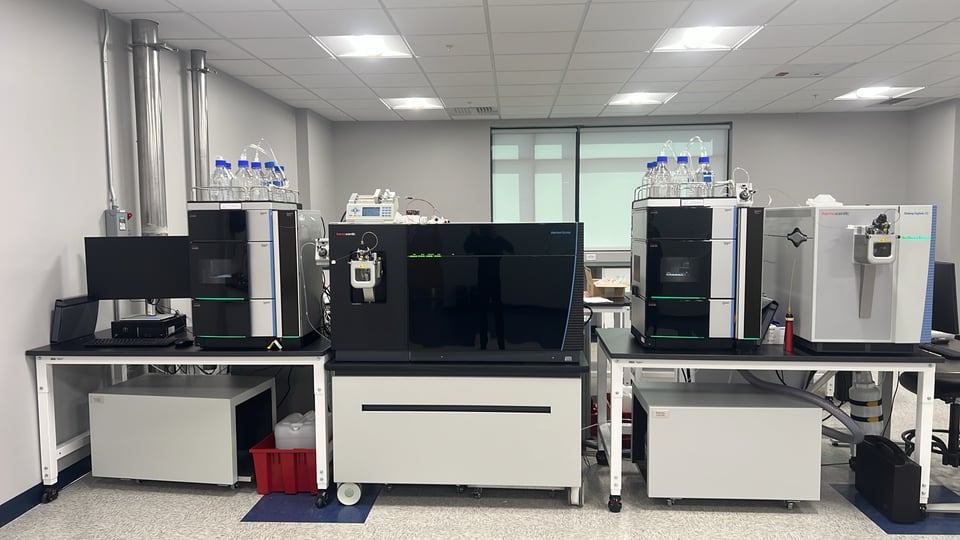
Orbitrap LC-MS instrument in the Crystal Bio Solutions biologics CMC analytical laboratory in Natick, Massachusetts

Extended Characterization of Biologics by High-Resolution Mass Spectrometry


Crystal Bio Solutions, part of Crystal Group, uses Orbitrap high-resolution mass spectrometry (HRMS) with orthogonal chromatographic and electrophoretic methods to define the structure and variants of complex biologics. Work is performed in our biologics CMC analytical laboratory in Natick, Massachusetts for antibodies, multispecifics, ADCs, fusion proteins and other proteins, to support CQA definition, biosimilar analytical similarity, comparability and CMC gap analysis.


CBS orange-blue banner-1
Intact, Reduced and Native Mass Intact and reduced (subunit) mass correlated with peptide mapping, plus native MS for non-covalent assemblies and glycoform distribution. Sequence and Sequence Variants Multi-enzyme peptide mapping targeting complete sequence coverage to confirm sequence, detect sequence variants and verify leader sequence removal. Post-Translational Modifications N- and C-terminal integrity, chain cleavage, deamidation and iso-Asp, oxidation, glycation and gluconoylation, and glycosylation. Disulfides, Glycans and Charge Variants Disulfide mapping with scrambling and free thiol assessment, glycan quantitation, and charge variant analysis with MS identification of the underlying modifications. Biosimilar Analytical Similarity Side-by-side HRMS and orthogonal comparison of a proposed biosimilar with multiple lots of the reference product, structured for the comparative analytical assessment. Binding, HDX-MS and MAPPs via Partners Through our strategic partners: binding kinetics by SPR, HDX-MS for epitope mapping and higher-order structure, and MAPPs for immunogenicity risk assessment, integrated with our HRMS data.
CBS orange banner-1
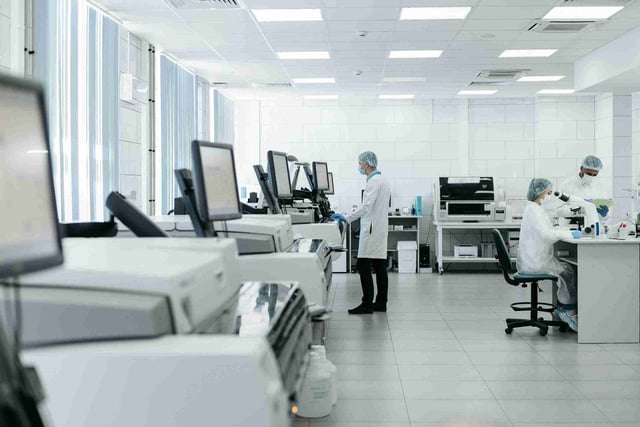
Analytical laboratory with chromatography and mass spectrometry instruments HRMS for Biosimilar Programs Draft FDA guidance issued in October 2025 proposes that a comparative efficacy study may not be necessary for many therapeutic protein biosimilars when a comparative analytical assessment, a PK similarity study and an immunogenicity assessment address residual uncertainty. If finalized as proposed, the analytical package would carry more weight than before.

  • Structure: intact and subunit mass, peptide mapping targeting complete coverage, disulfides and free thiols
  • Microheterogeneity: glycan profiles, PTM levels and charge variants across reference and proposed lots
  • Higher-order structure: orthogonal biophysical methods, with HDX-MS through strategic partners
  • Function: binding kinetics by SPR through strategic partners

The clinical elements, PK similarity and immunogenicity, can be supported by our Pleasanton bioanalysis laboratory and clinical pharmacology team.

Related reading: The 6 most common analytical gaps in biosimilar programs; HRMS in biologics characterization; Antibody glycosylation

Related Services

Biologics CMC Analytical Characterization, CMC analytical strategy and gap analysis for biologics. Developability Assessment Chemical and biophysical liability assessment for candidate selection. Biotransformation and In Vivo CQA Drug characterization in serum and other matrices after dosing. ADC Programs DAR, conjugation, payload stability and ADC bioanalysis.

Frequently Asked Questions


What is extended characterization of a biologic?

Extended characterization goes beyond routine release methods to define a molecule's structure in detail: its sequence, post-translational modifications, disulfide structure, glycosylation, charge and size variants and higher-order structure. It supports CQA definition, comparability and responses to regulatory questions.


Why use high-resolution mass spectrometry?

HRMS measures mass precisely enough to identify small modifications, such as a 1 Da deamidation, and to locate them at specific residues. It confirms identity and explains what other methods, such as charge variant or size variant profiles, are showing.


Why use more than one enzyme for peptide mapping?

A single enzyme can leave parts of the sequence as peptides that are too short, too long or poorly detected. Combining enzymes increases coverage, usually to the complete sequence, which is needed to confirm the sequence and detect sequence variants with confidence. Any region that remains difficult is confirmed with an orthogonal approach.


What is disulfide scrambling and why does it matter?

Disulfide scrambling means cysteines are linked in a non-native pattern. It can change structure, activity and stability, so disulfide mapping and free thiol measurement are part of characterizing antibodies and other cysteine-rich proteins.


What are HDX-MS and MAPPs used for?

HDX-MS measures hydrogen-deuterium exchange to map epitopes and compare higher-order structure. MAPPs (MHC-associated peptide proteomics) identifies drug-derived peptides presented on MHC class II molecules, which helps locate potential T-cell epitopes for immunogenicity risk assessment. CBS provides HDX-MS and MAPPs through strategic partners and integrates the results with in-house HRMS data.


Can analytical data replace a comparative efficacy study for a biosimilar?

In October 2025 FDA issued draft guidance proposing that a comparative efficacy study may not be necessary for many therapeutic protein biosimilars when comparative analytical data, a human PK similarity study and an immunogenicity assessment address residual uncertainty. The guidance is still a draft (FDA withdrew its 2015 final biosimilarity guidance in March 2026). FDA can still request a clinical study, so the strength of the analytical package, including HRMS characterization of multiple reference and proposed lots, matters for each program.


Which molecule types does CBS characterize?

Monoclonal antibodies, antibody fragments, bispecific and trispecific antibodies, fusion proteins, PEGylated proteins, ADCs, and other proteins and peptides such as cytokines, growth factors and enzymes.


Where is this work performed?

Extended characterization is performed in the CBS biologics CMC analytical laboratory in Natick, Massachusetts.


Have a Question?

Connect with our experts and get started on your project today.