Crystal Bio Solutions logo
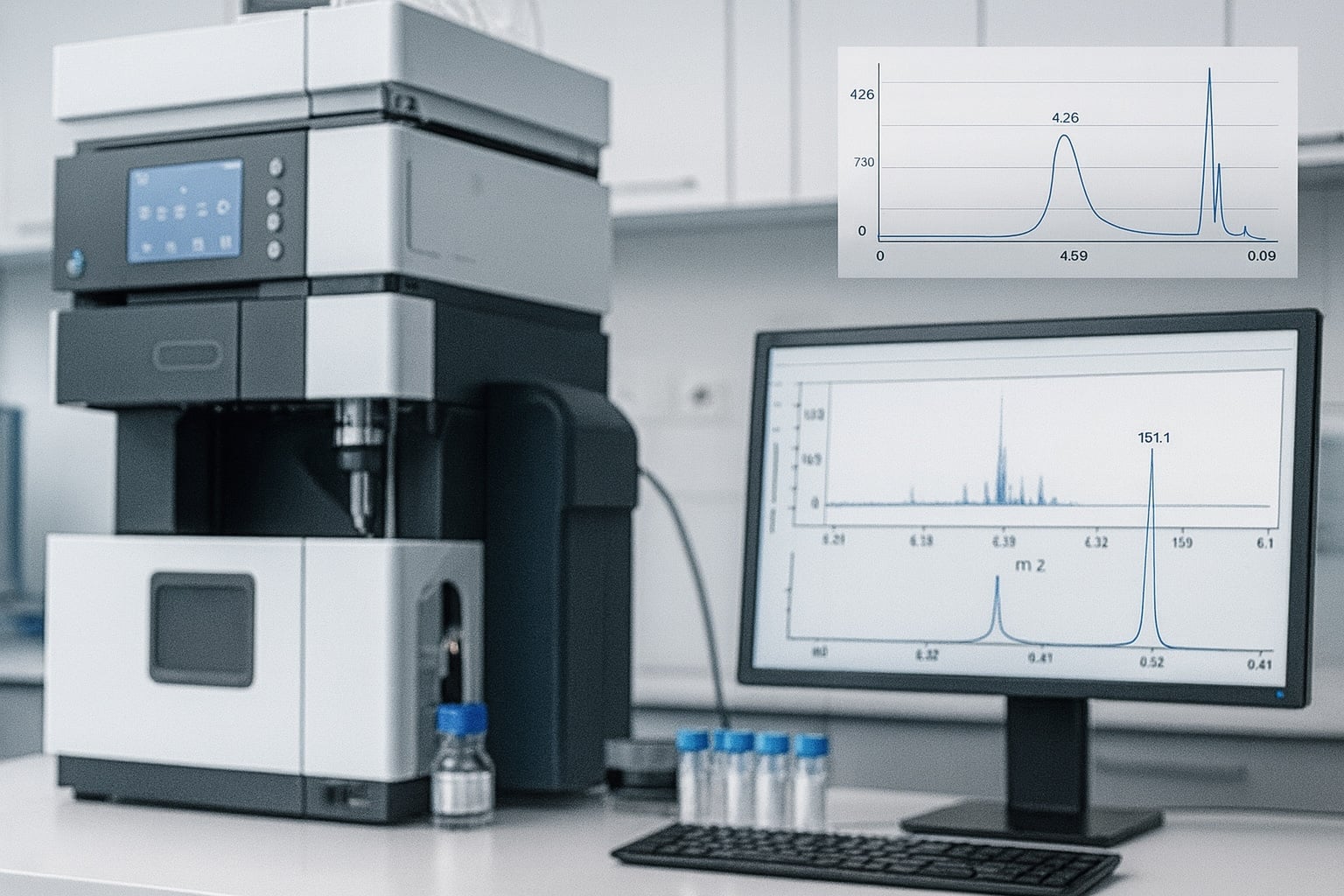
LC-MS/MS system used for ADC bioanalysis

ADC Bioanalysis

Antibody-drug conjugates need several analytes measured to describe their exposure. Crystal Bio Solutions, part of Crystal Group, develops and validates assays for total antibody, conjugated payload and free payload, together with ADA and NAb assays, and analyzes nonclinical and clinical samples in our GLP- and GCLP-compliant laboratory in Pleasanton, California.

CBS orange-blue banner-1
Total Antibody Ligand-binding assays (ELISA, MSD or Gyrolab) or immunocapture LC-MS/MS of a surrogate peptide, chosen for the antibody, the matrix and the sensitivity required. Conjugated Payload Immunocapture followed by enzymatic release of the payload and LC-MS/MS, or ligand-binding formats that detect the antibody and the payload together. Free Payload Sensitive LC-MS/MS after protein precipitation, liquid-liquid or solid-phase extraction, with sample handling designed to avoid releasing payload during processing. Immunogenicity for ADCs Tiered ADA assays (screening, confirmation and titer) and NAb assays designed for conjugated molecules, including drug tolerance strategies. In Vivo Stability and DAR Immunocapture with high-resolution MS at our Natick, Massachusetts laboratory characterizes deconjugation and drug-to-antibody ratio changes in circulation. Validation and Sample Analysis Each analyte method is validated following ICH M10 and applied to GLP toxicology and clinical samples, with reports prepared to support regulatory submissions.
CBS orange banner-1
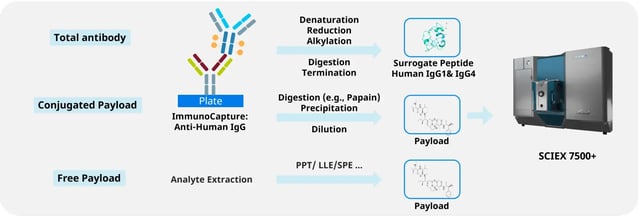
Generic LC-MS/MS workflow for total antibody, conjugated payload and free payload Case Study: A Generic LC-MS/MS Workflow for ADC PK A reusable LC-MS/MS workflow quantifies the three main ADC analytes to support nonclinical and clinical PK studies on a short timeline.

    Highlights:

  • Total antibody by immunocapture and surrogate peptides for human IgG1 (25.0–5000 ng/mL) and IgG4 (50.0–5000 ng/mL)
  • Conjugated payload after immunocapture and enzymatic release (50.0–5000 ng/mL)
  • Free payload after extraction, 10.0–2000 pg/mL
  • Linearity r ≥ 0.999 for all analytes on triple quadrupole LC-MS/MS

Related Services

PK Assays for Biologics and ADCs LBA, LC-MS/MS and hybrid methods for antibody, bispecific and ADC PK. NAb and ADA Assays Immunogenicity assay development, validation and sample analysis. Biotransformation and In Vivo CQA Immunocapture HRMS for ADC stability and DAR in circulation. ADC Programs Analytical and bioanalytical support across an ADC program.

Frequently Asked Questions

Which analytes should be measured for an ADC?

Most programs measure the conjugated ADC (as conjugated antibody or conjugated payload), total antibody and the unconjugated (free) payload, and add metabolites when they matter for safety or activity. FDA's 2024 guidance on clinical pharmacology considerations for ADCs describes this multi-analyte approach. The final set depends on the linker, the payload and the questions each study must answer.

Should we use ligand-binding assays or LC-MS/MS?

Both are accepted when validated following ICH M10. Free payload is usually measured by LC-MS/MS. Total antibody and conjugated analytes can be measured by ligand-binding assays or by hybrid immunocapture LC-MS/MS, depending on reagent availability, sensitivity, selectivity and throughput.

How low can free payload be quantified?

It depends on the payload, the matrix and the extraction. In our ADC case study, free payload was quantified from 10.0 pg/mL with linearity r ≥ 0.999.

How is immunogenicity assessed for an ADC?

With a tiered ADA approach (screening, confirmation and titer) and, where needed, a NAb assay. Because antibodies can form against the antibody, the linker or the payload, the assay design and drug tolerance strategy take the conjugated structure into account.

How are DAR changes in circulation monitored?

By capturing the ADC from serum or plasma and analyzing it by high-resolution mass spectrometry, which shows deconjugation and shifts in drug-to-antibody ratio over time. This work is done at our Natick, Massachusetts laboratory.

What information do you need to prepare a quote?

The antibody isotype, linker and payload, the conjugation chemistry, available reference standards and critical reagents, species and matrices, expected concentration ranges, the number of samples, the study type (GLP toxicology or clinical) and your timeline.

Discuss your ADC bioanalysis strategy with Dr. Meina Liang, our Chief Scientific Officer

Bring a real ADC PK or immunogenicity question to the leader who supervises our bioanalysis projects. One hour at no cost, with a CDA in place first. Our business development team replies within one business day.

Request a Consultation

Ready to Start a Project?

Tell us about your study. Our business development team replies within one business day.

Request a Proposal